
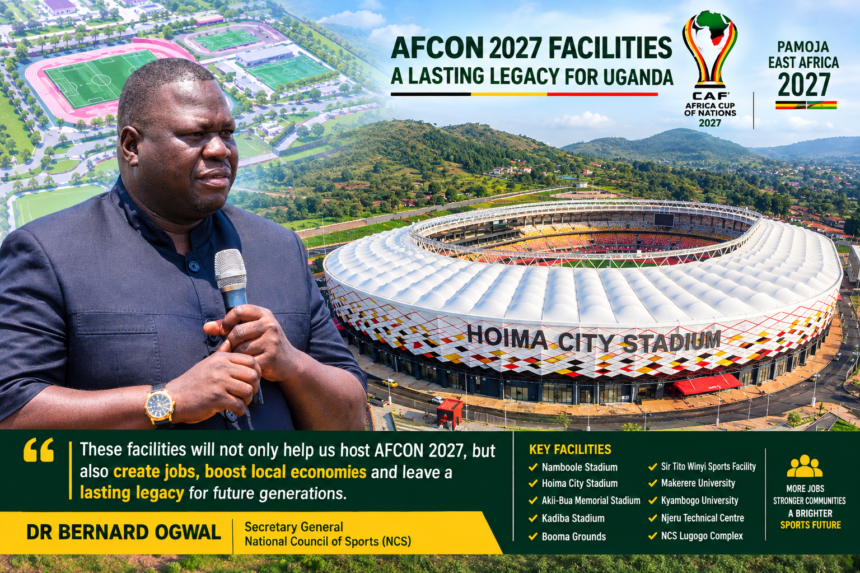
KAMPALA — The Government’s massive investment in sports infrastructure ahead of the 2027 Africa Cup of Nations (AFCON) will leave Uganda with more than stadiums, but a lasting network of sporting, economic and employment opportunities across different parts of the country, according to the Secretary General of the National Council of Sports (NCS), Dr Bernard Patrick Ogwel.
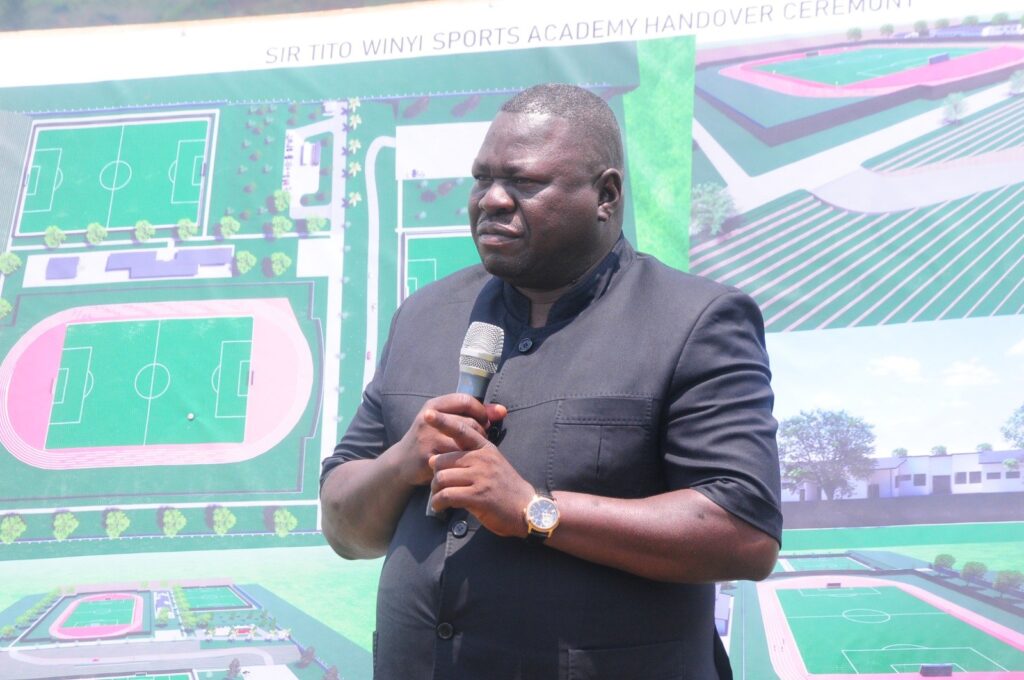
Dr Ogwel applauds Government for investing heavily in sports facilities as Uganda prepares to co-host AFCON 2027 with Kenya and Tanzania, saying the infrastructure being developed will continue benefiting communities long after the continental tournament has ended.
The investment covers major stadiums, training grounds, sports academies and institutional facilities in Kampala, Hoima, Lira and other parts of the country.
According to NCS, the infrastructure programme is also intended to support sports development and future international competitions, with Government viewing the facilities as infrastructure “for posterity” rather than projects that will only serve AFCON 2027.
Namboole: Uganda’s main international sporting gateway
Mandela National Stadium, Namboole, remains one of Uganda’s most important sporting facilities and is at the centre of the country’s preparations for major international football.
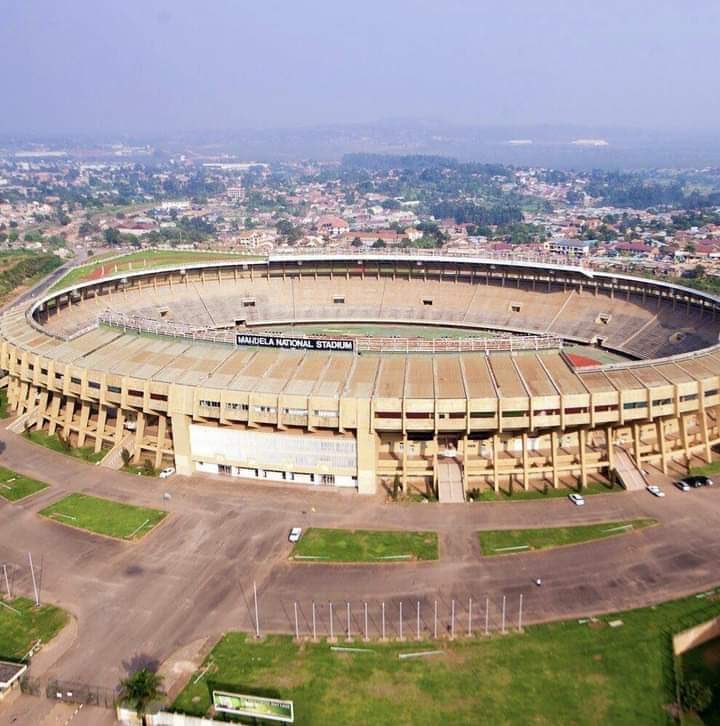
The redevelopment of Namboole is expected to strengthen Uganda’s ability to host high-level international matches while providing a modern home for national teams and major sporting events.
Its location along the Kampala–Jinja corridor also means that increased sporting activity can benefit surrounding businesses, hotels, restaurants, transport operators, traders and other service providers.
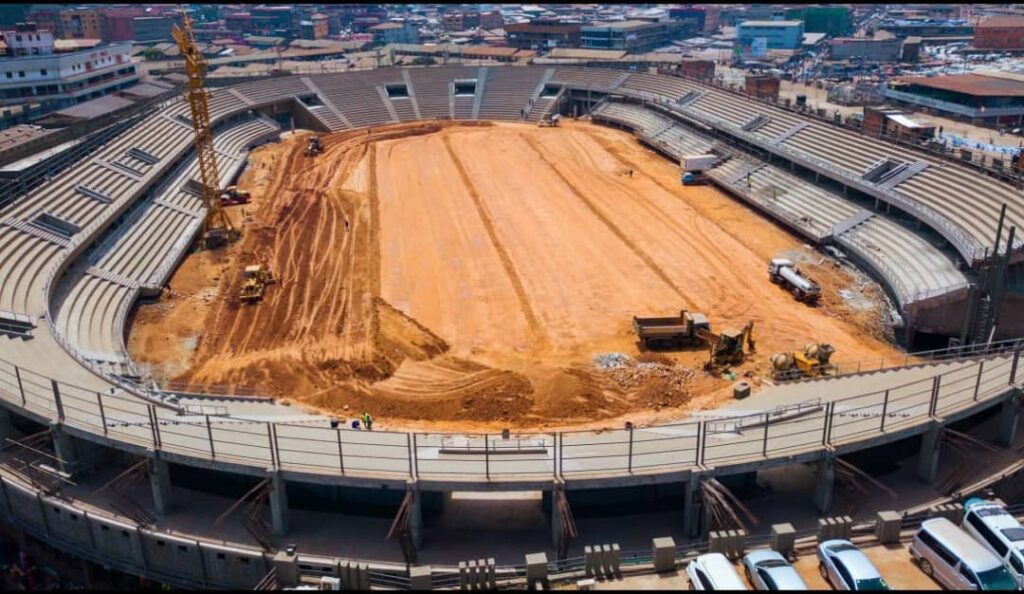
The upgraded stadium is therefore not only a football venue but also an economic hub capable of attracting large numbers of spectators, teams, visitors and international delegations.
Hoima City Stadium: Transforming the Albertine region
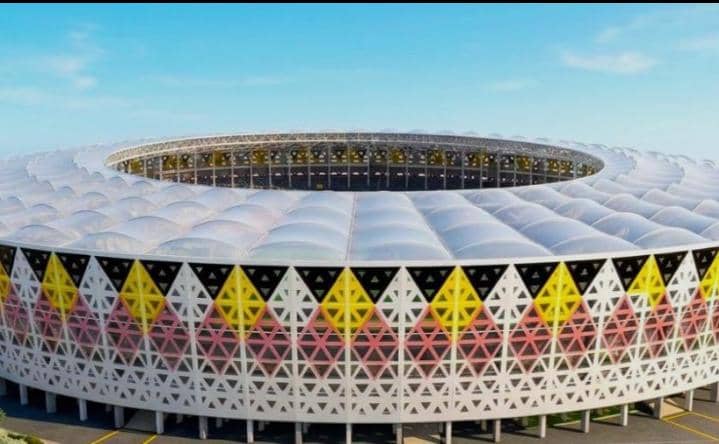
Hoima City Stadium represents one of the biggest sports investments outside Kampala.
The 20,000-seater facility includes a multi-sport complex, mini arena, swimming pool, outdoor pitches, athletics track and courts for sports including basketball and volleyball. Construction employed more than 1,000 workers, with the majority being Ugandan, according to NCS figures.
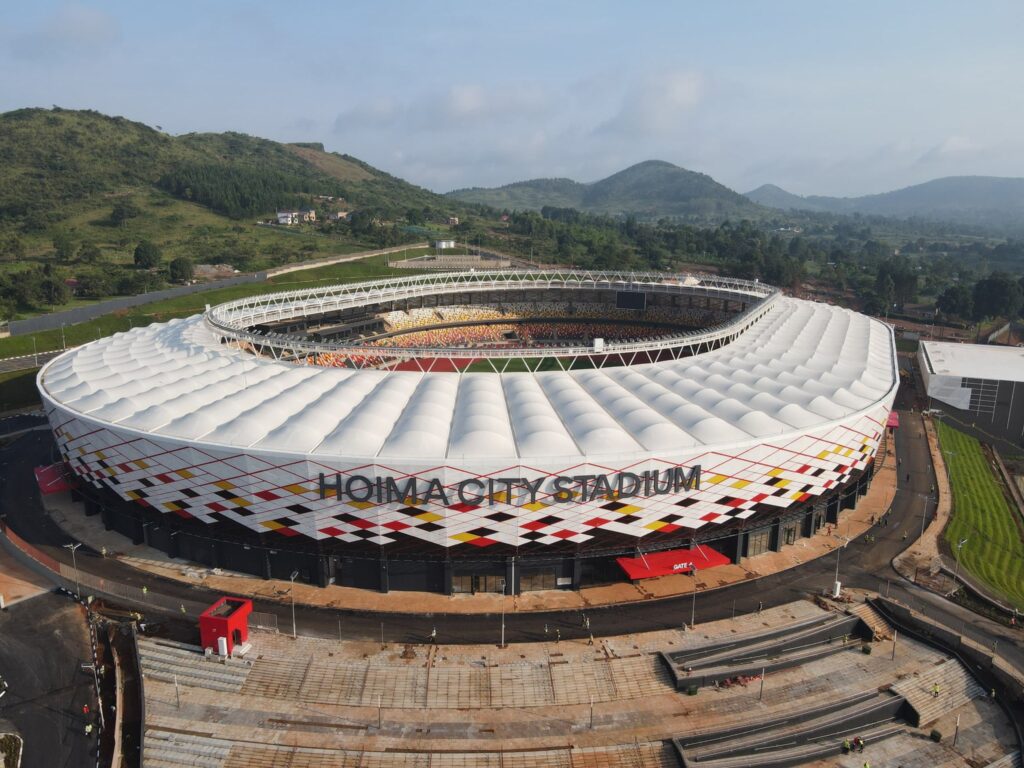
For Hoima and the wider Albertine region, the facility is expected to stimulate businesses around hospitality, transport, tourism, accommodation, food services and entertainment.
It also gives young people in Bunyoro access to a modern facility without having to travel to Kampala for major sporting activities.
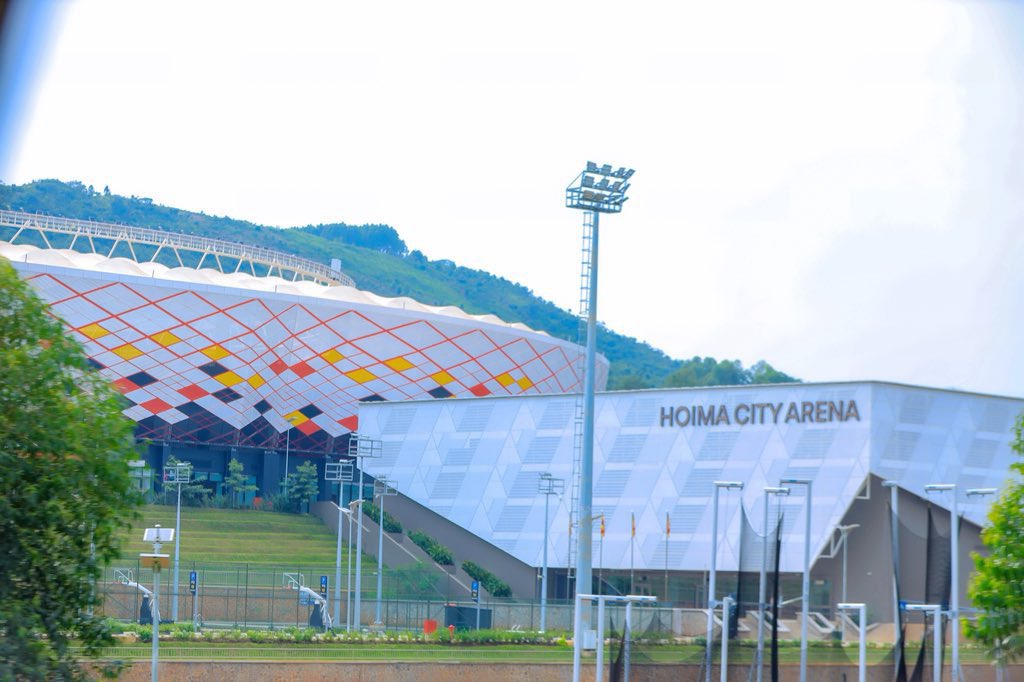
The stadium’s presence is already changing the development outlook of Hoima, with Government also identifying the need for additional hotels, roads and emergency services to support the increased activity expected around the city.
Akii-Bua Stadium: Giving Lango a national sporting centre
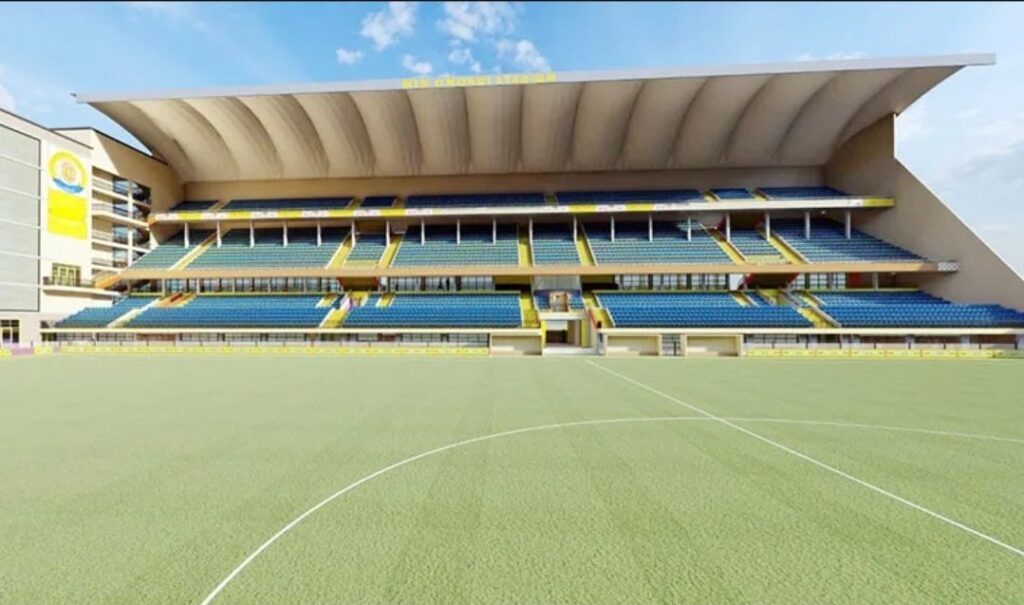
In Lira, the construction of the Akii-Bua Olympic Stadium is expected to establish the city as another major sporting centre.
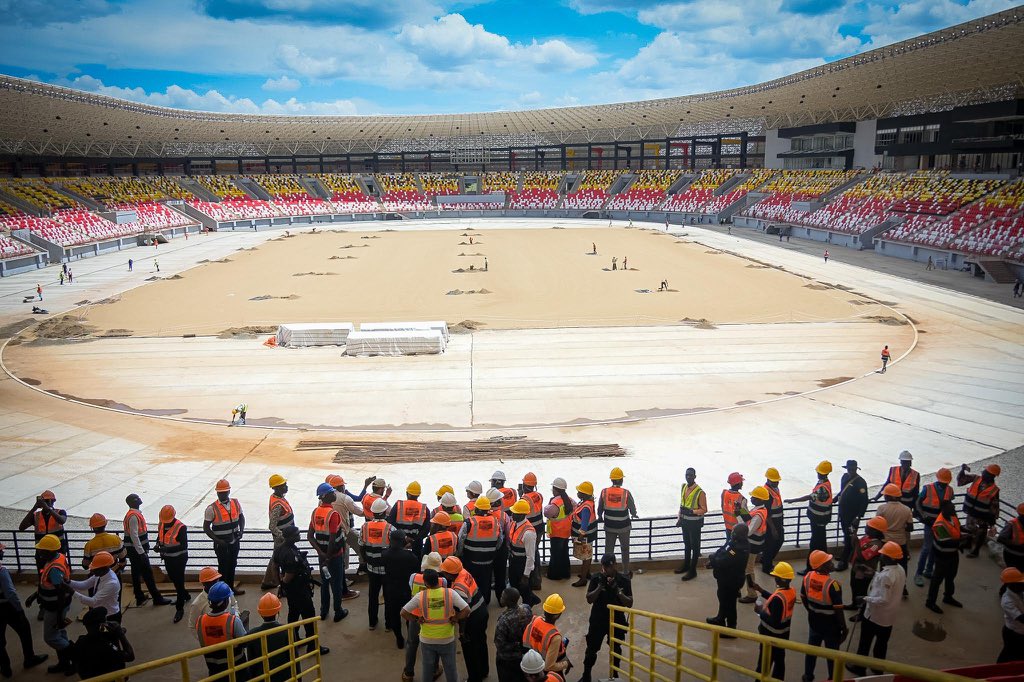
Named after Uganda’s legendary Olympic champion John Akii-Bua, the facility is designed to support football and athletics while serving the wider northern Uganda region.
The stadium will create opportunities for athletes, coaches, sports administrators, event organisers and businesses in Lira.
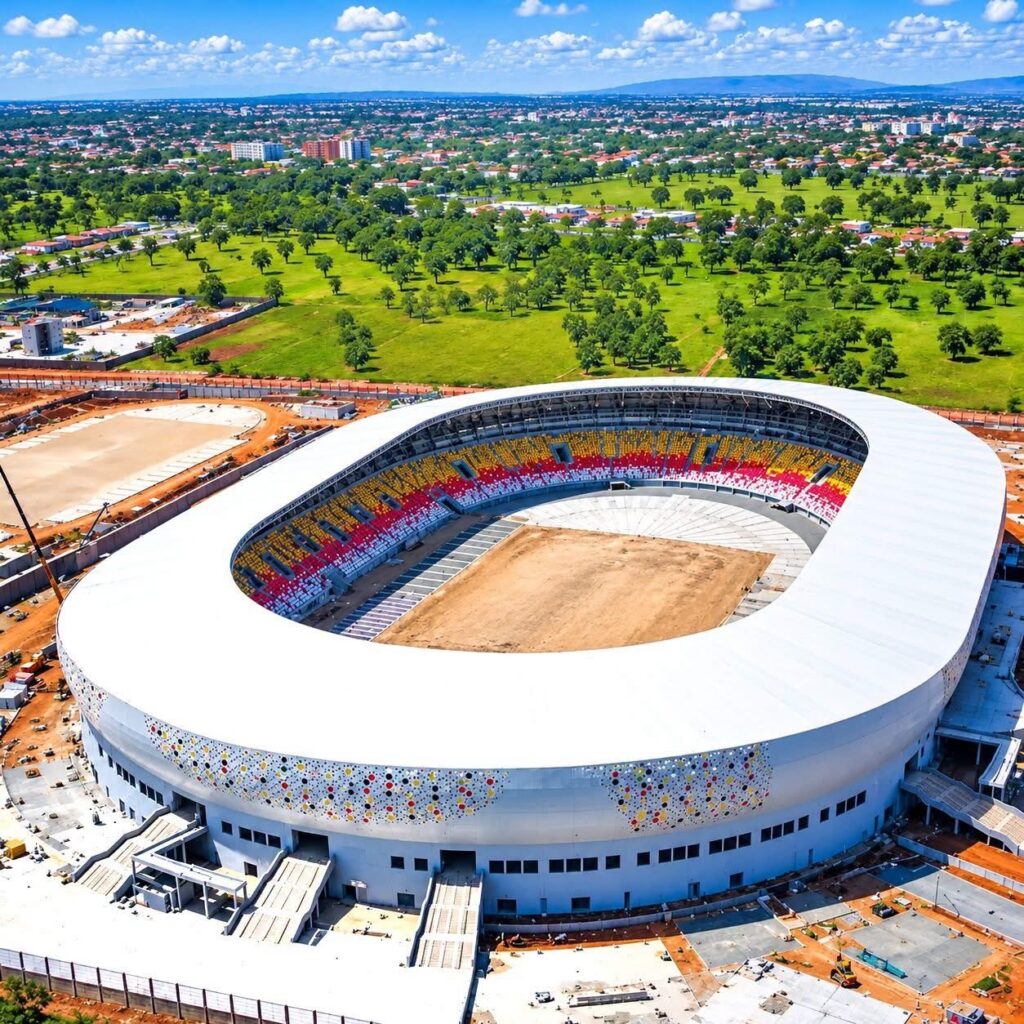
NCS has also planned training infrastructure around the stadium, including a training ground at Lira University, meaning the investment is intended to develop an entire sporting ecosystem rather than a single stadium.
Kadiba: Bringing a CAF-standard training facility to Kampala
Kadiba Stadium in Kampala is being developed into a CAF-certified AFCON 2027 training ground.
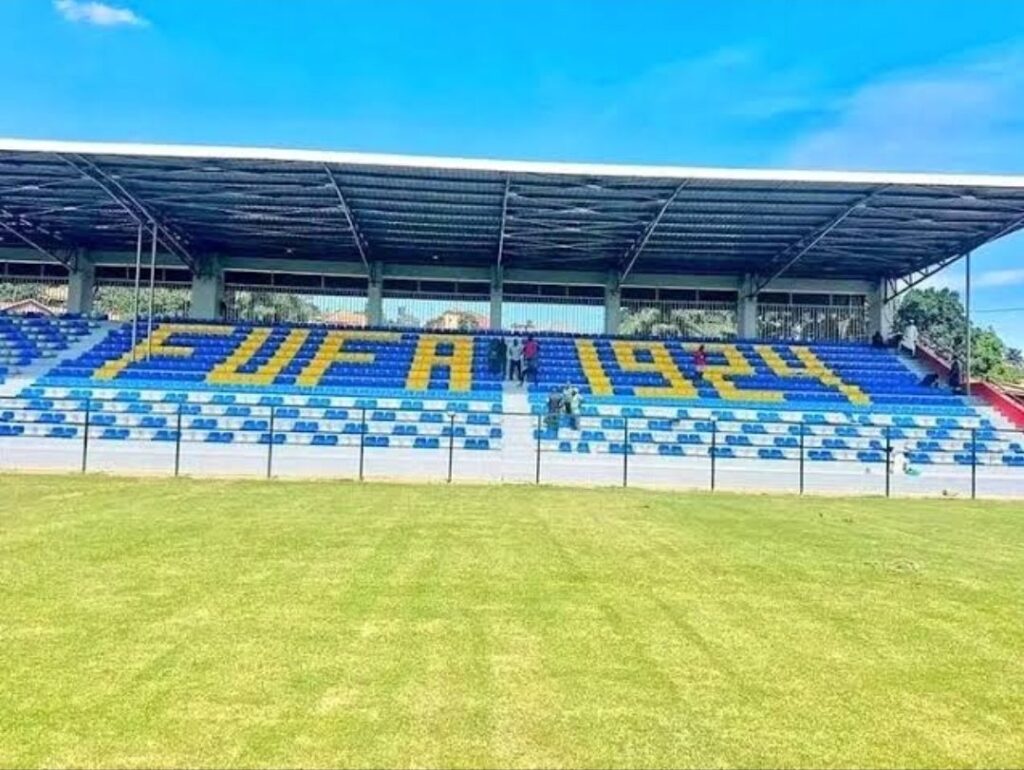
The project includes improvements to the playing surface, floodlights, electrical systems and ICT infrastructure.
Beyond AFCON, the facility will give football teams and other athletes a modern training environment while creating opportunities for coaches, groundsmen, maintenance workers, security personnel and other sports-service providers.
Sir Tito Winyi: Uganda’s first National Sports Academy
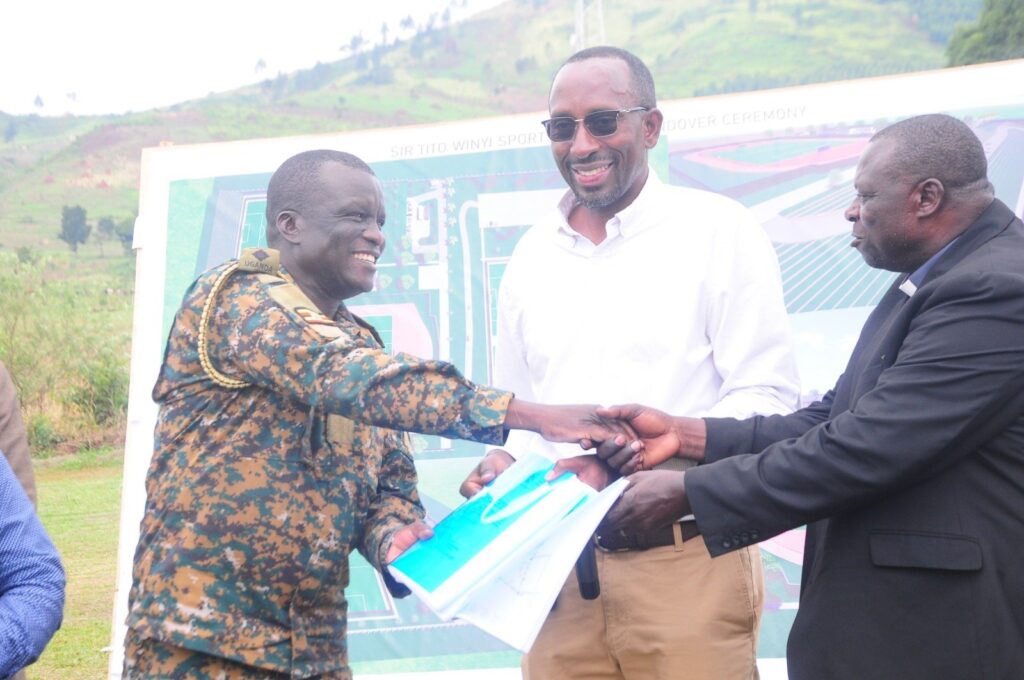
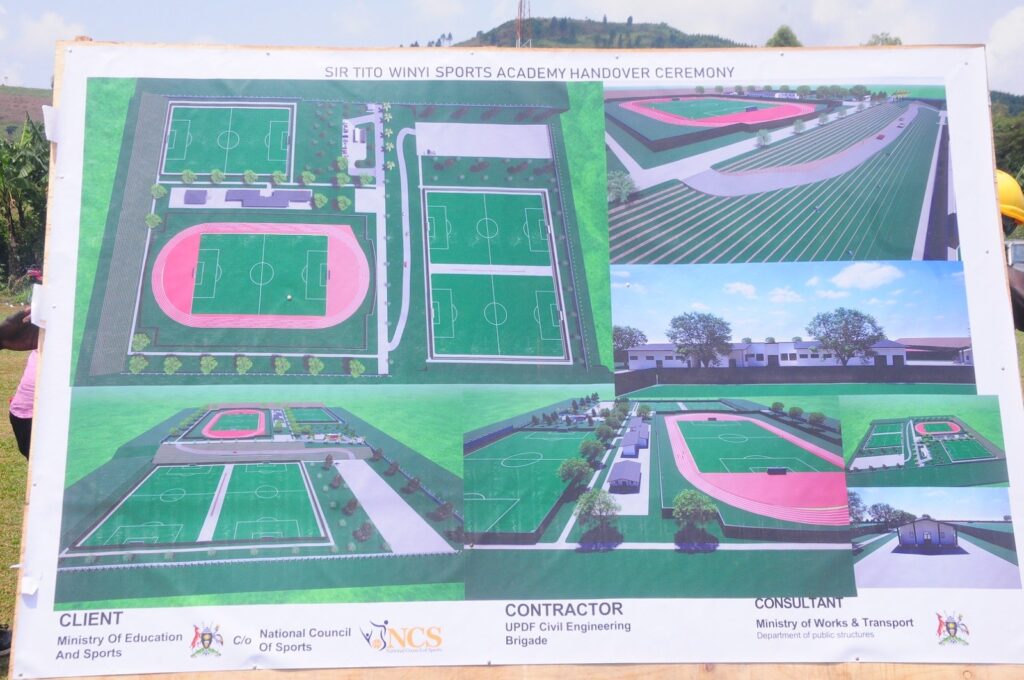
One of the most significant long-term projects is the development of the Sir Tito Winyi site in Hoima into Uganda’s first National Sports Academy.
The facility is planned to include three floodlit grass pitches, an artificial turf, athletics track, multipurpose hall, changing rooms, ICT facilities, parking and access roads.
Its importance goes beyond AFCON because it is intended to become a centre for identifying and developing young talent in football, athletics, rugby and other sports, while also supporting the training of coaches and technical personnel.
For Hoima and Bunyoro, this could create a direct pathway for talented young people to enter professional and national-level sport.
Makerere University: Turning a university campus into a sporting hub
Government’s investment at Makerere University will provide additional training infrastructure within one of Uganda’s oldest institutions of higher learning.
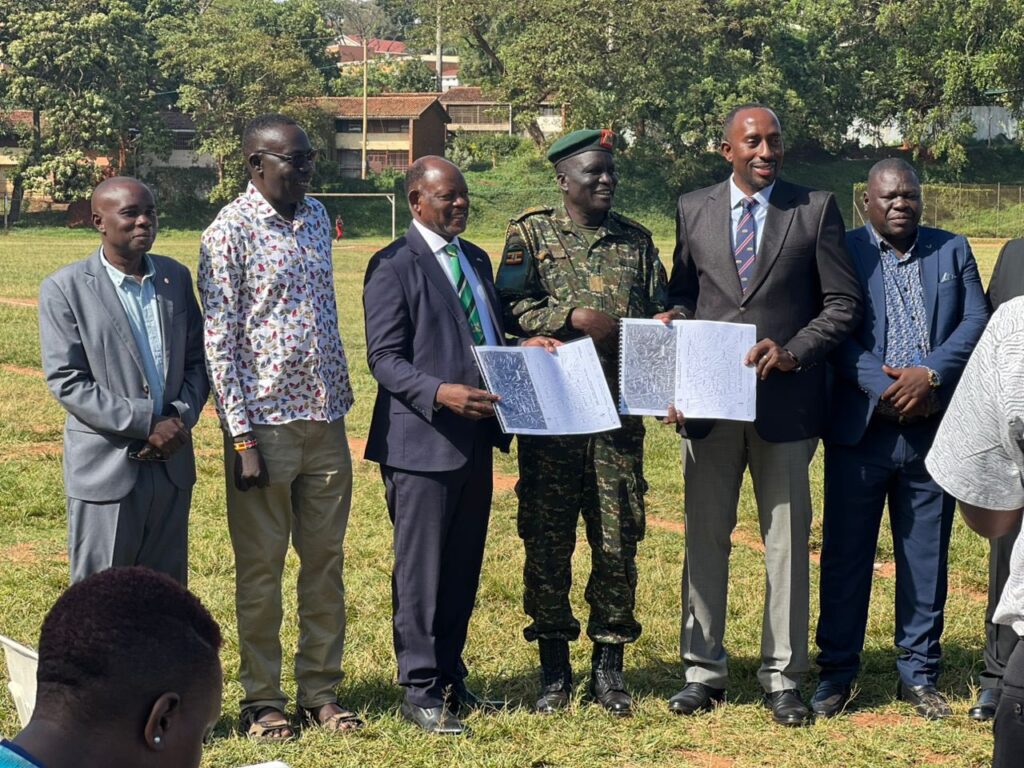
The facility will support AFCON preparations while remaining available for students, university teams, national teams and other sporting programmes.
This will strengthen the connection between education and sports, allowing universities to play a bigger role in identifying and nurturing sporting talent.
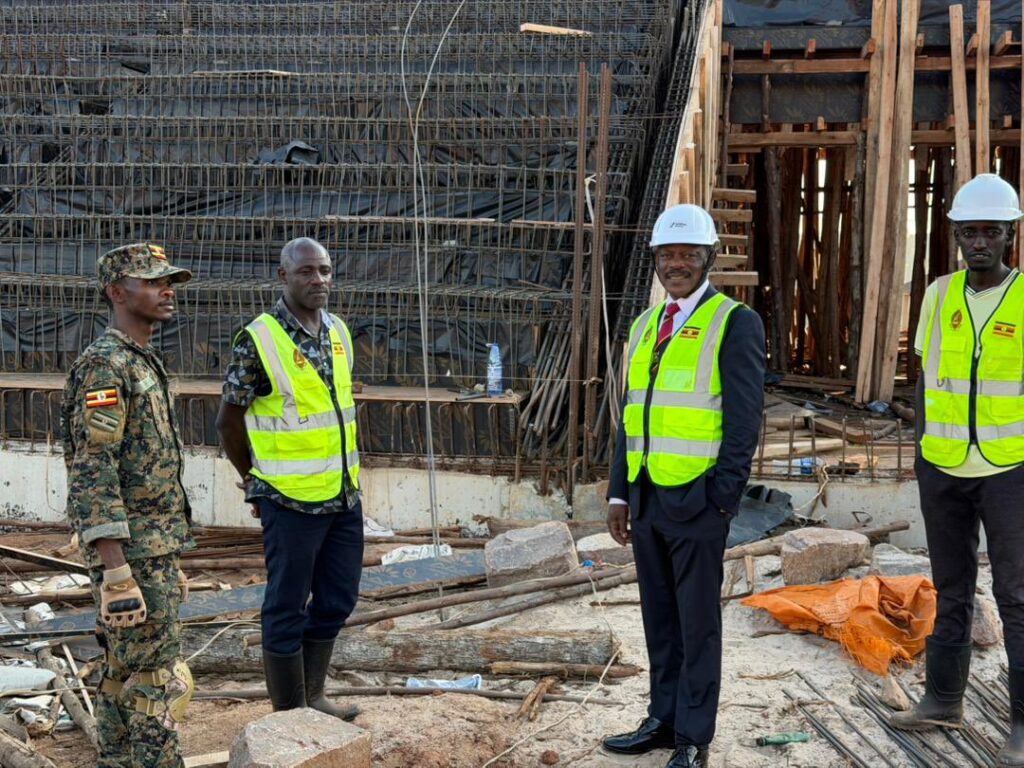
Kyambogo University: Developing sport alongside technical skills
At Kyambogo University, Government is also developing an AFCON training ground.
The facility will serve the tournament but is expected to remain an important sporting asset for students, athletes and teams after 2027.
Its location within a major education and skills-development institution creates opportunities to combine sports with technical education, sports science, coaching, facility management and other professional disciplines.
Njeru Technical Centre: Strengthening the training network
The Njeru Technical Centre is among the facilities being incorporated into the wider sports infrastructure programme.
Its development will expand the geographical distribution of training facilities and provide athletes and teams with additional space for preparation.
For the surrounding communities, such facilities can stimulate demand for accommodation, transport, food, maintenance services and other businesses whenever teams and competitions are hosted there.
Booma Grounds and other regional training facilities
Government is also developing facilities such as Booma Grounds and Masindi Grounds to support the Hoima City Stadium cluster.
Similarly, training facilities are being developed around Lira, Gulu and other locations to support the country’s major stadiums.
This approach means that AFCON preparations are creating a network of facilities rather than concentrating all sporting infrastructure in Kampala.
NCS says the training grounds are designed with standard pitches, floodlights, perimeter fencing, changing rooms and other facilities required for high-level football.
NCS Lugogo complex: A stronger home for sports administration
The Government’s infrastructure programme also extends to the National Council of Sports complex at Lugogo, where redevelopment is intended to provide better facilities for sports administration and development.
The Lugogo sports complex is part of the wider redevelopment programme that NCS has identified as a strategic project.
A modern NCS facility will strengthen the institution’s ability to coordinate national sports federations and associations, manage sporting programmes and support athletes.
It will also contribute to the transformation of Lugogo into a major sports hub, complementing existing facilities such as the indoor arena and other sporting infrastructure in the area.
Jobs beyond the stadiums
Dr Ogwel’s argument is that the benefits of the Government’s investment should be measured beyond the number of seats inside the stadiums.
Construction itself has already created thousands of jobs, involving engineers, architects, builders, electricians, plumbers, drivers, suppliers, security personnel and other workers.
After construction, the facilities will require permanent workers to manage pitches, grounds, lighting, ICT systems, security, cleaning, hospitality, ticketing, administration and maintenance.
The facilities can also generate indirect employment by attracting tournaments, concerts and other events that bring visitors who spend money on hotels, restaurants, transport, retail and entertainment.
Three five-star pillars of the investment
Dr Ogwel has particularly pointed to Namboole, Hoima City Stadium and Akii-Bua Stadium as among the country’s facilities being developed to the highest international standards.
Together, the three facilities will give Uganda major sporting anchors in Central Uganda, Bunyoro and Northern Uganda, helping distribute sports-related economic activity beyond Kampala.
The broader strategy, according to NCS, is to use AFCON 2027 as a catalyst for sports tourism, regional development, employment creation and long-term sports excellence. Government has also linked the infrastructure drive to the country’s ambition to host future continental sporting events, including the proposed 2031 African Games.
A legacy beyond AFCON 2027
For Dr Ogwel, therefore, the construction programme should not be viewed simply as Uganda preparing to host a three-week football tournament.
It is an investment in the country’s future sporting economy.
From Namboole in Kampala to Hoima City Stadium in Bunyoro, Akii-Bua in Lira, Sir Tito Winyi, Kadiba, Makerere, Kyambogo, Njeru and the NCS Lugogo complex, the infrastructure is creating a wider network through which Uganda can nurture athletes, host international competitions, attract visitors and create employment.
**The ultimate test, however, will be how effectively Uganda maintains and utilises these facilities after AFCON 2027—ensuring that the investment continues to generate sporting and economic value for communities for decades to come.**