
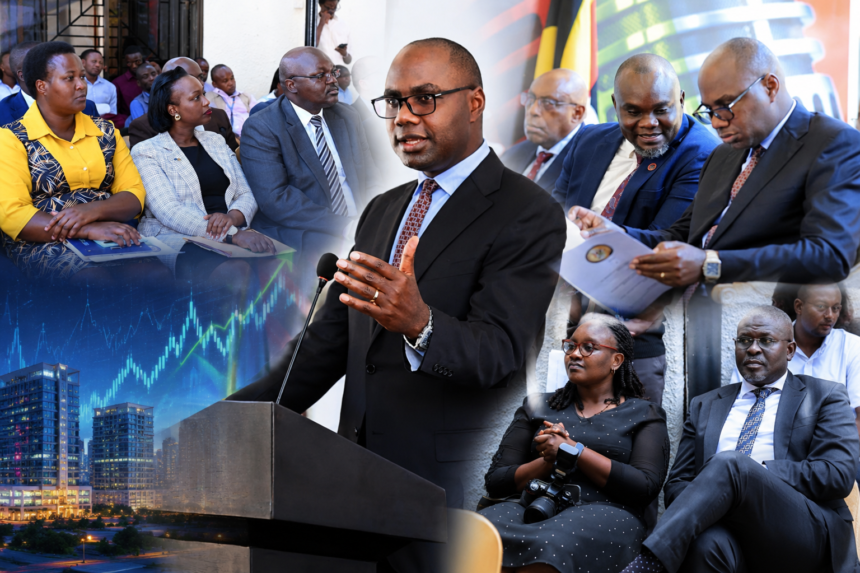
KAMPALA — Government has warned that Uganda’s ambition to transform into a much larger and more industrialised economy cannot be achieved through the national Budget alone, urging deeper and more innovative capital markets to mobilise long-term domestic and international financing.
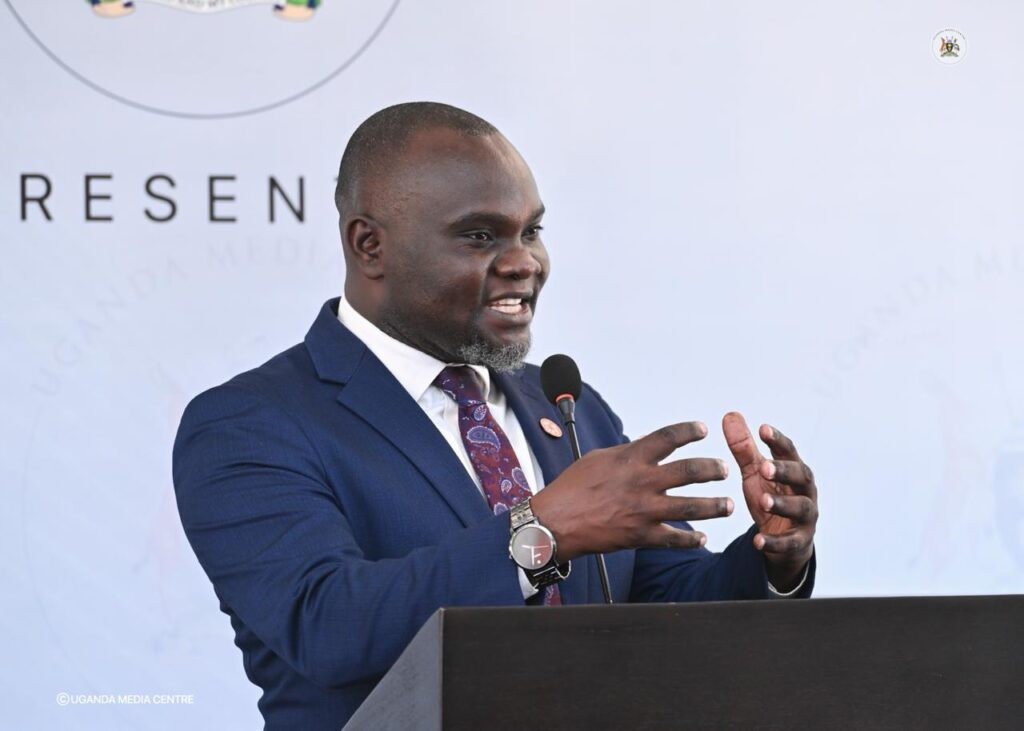
State Minister for Finance, Planning and Economic Development Henry Musasizi said Uganda will require patient capital capable of financing major investments in infrastructure, agro-industrialisation, tourism, minerals, oil and gas, science and technology as the country implements the Fourth National Development Plan and the Tenfold Growth Strategy.
“That transformation cannot be financed by the national Budget alone. We need long-term, patient capital that is prepared to be invested for ten, fifteen or twenty years to build the assets that will carry this economy forward,” Mr Musasizi said.
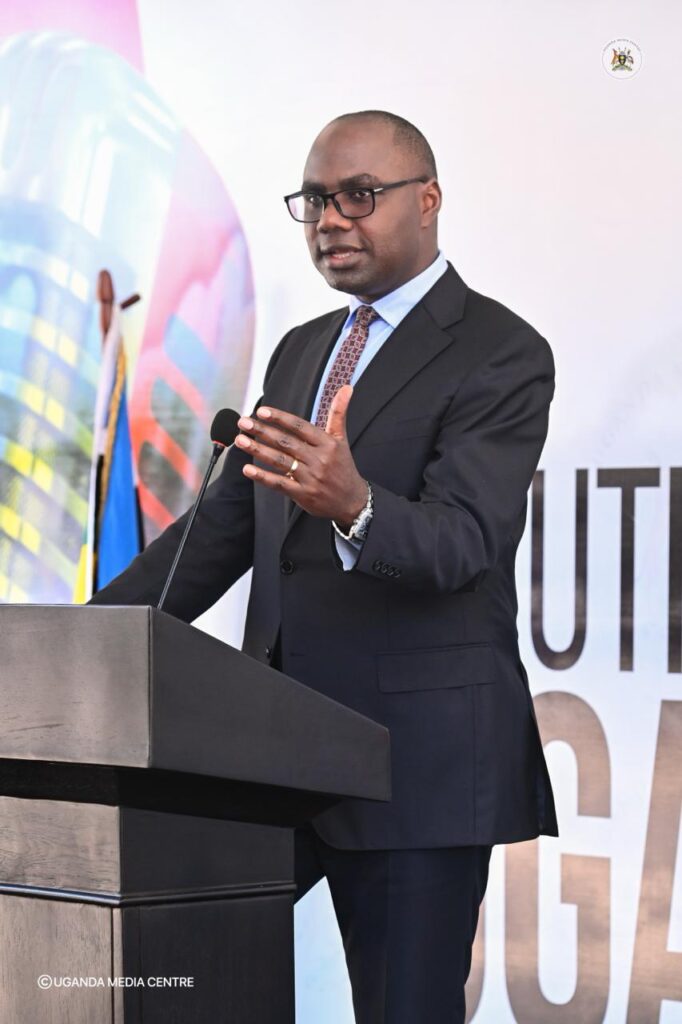
The minister was speaking in Kampala on Tuesday, September 1, 2026, during the launch of the Capital Markets Authority (CMA)@30 anniversary celebrations, marking three decades of developing, promoting and regulating Uganda’s capital markets.
The anniversary is being celebrated under the theme “CMA@30: Reimagining Uganda’s Capital Markets for a Sustainable Future.”
Mr Musasizi said the capital markets have become increasingly important to Uganda’s development ambitions because they can provide financing over much longer periods than conventional bank lending.
“Where a bank can lend for three or five years, a capital market can mobilise capital for a generation,” he said.

He pointed to infrastructure bonds, project bonds, Real Estate Investment Trusts (REITs), green and sustainability-linked bonds, and public offers of shares as some of the instruments Uganda can use to finance its transformation.
According to the minister, financing industrial parks and agro-processing zones under the Tenfold Growth Strategy will require investment instruments that enable pension funds, insurance companies, diaspora investors and ordinary Ugandans to invest alongside Government and development partners.
He further said the development of energy, transport and digital infrastructure needed to unlock Uganda’s tourism and minerals potential would require infrastructure bonds and project-finance structures that the capital markets must be prepared to support.
CMA targets one million investors
The call for deeper capital markets comes as CMA unveils an ambitious plan to significantly expand Ugandan participation in investment.
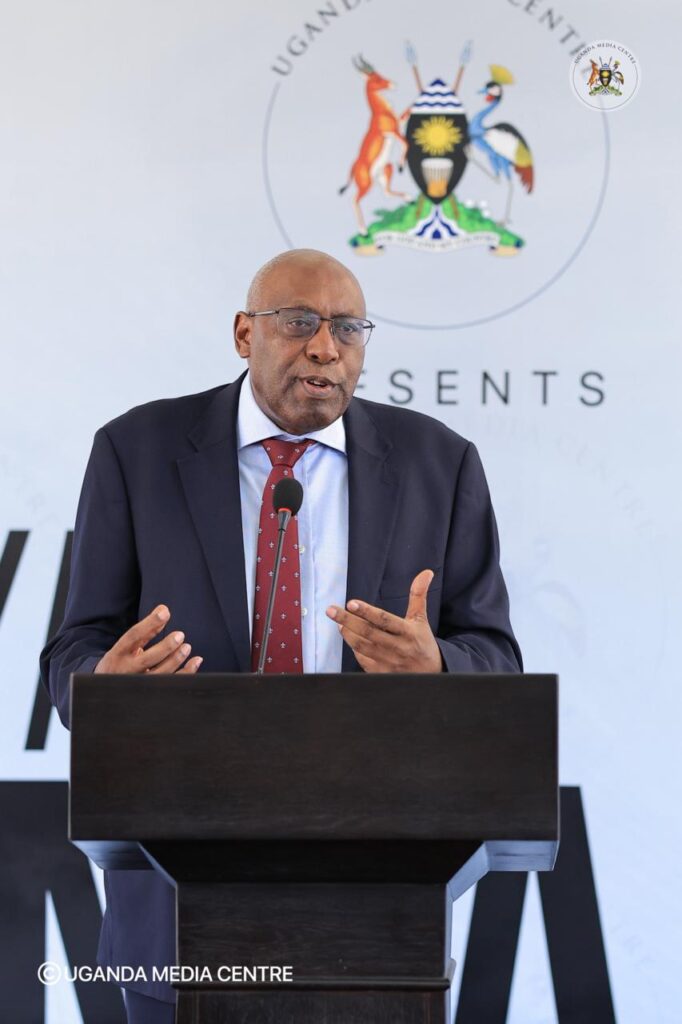
CMA Chief Executive Officer Josephine Okui Ossiya said the Authority wants funded Collective Investment Scheme (CIS) accounts to rise to one million within five years, arguing that the target represents more than a statistical milestone.
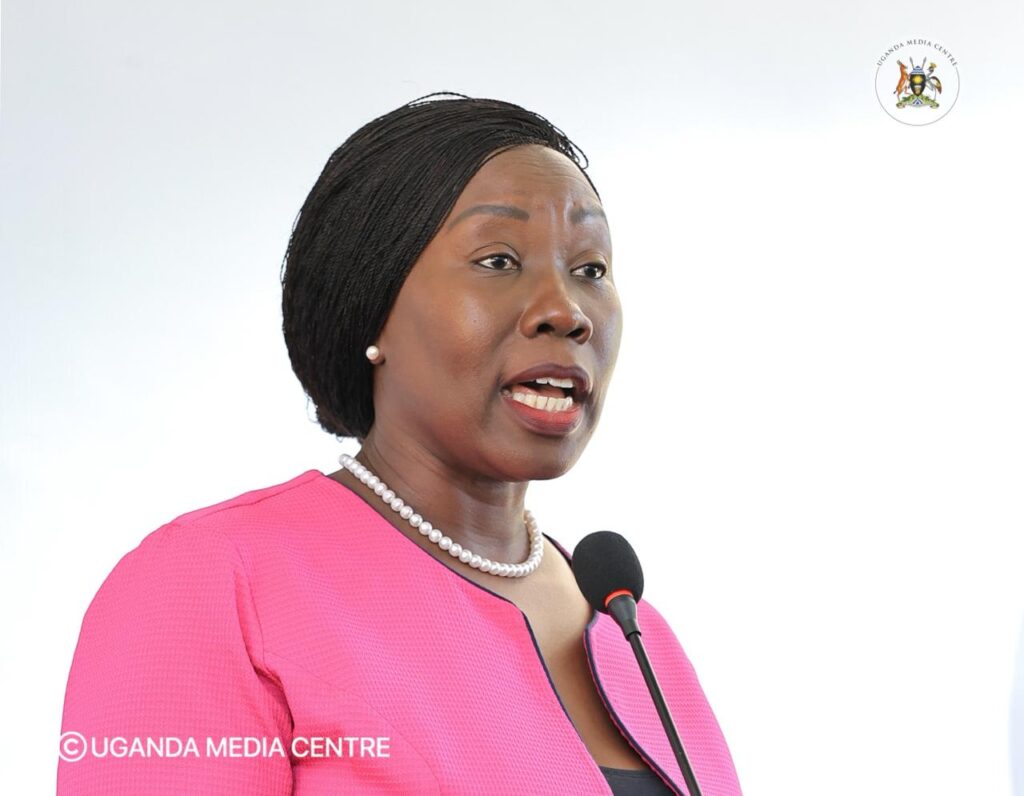
“We want to see funded Collective Investment Scheme accounts grow to one million within five years. This is not simply a numerical target. It represents a different vision of financial participation in Uganda,” Ms Ossiya said.
She said CMA also wants more Ugandans to invest in shares and more public and private companies to raise capital by listing on securities exchanges.
The Authority’s figures show that Uganda’s capital markets have expanded significantly over the past three decades.
CMA reported that assets under management in Collective Investment Schemes have reached Shs7.06 trillion, while total funds mobilised through the capital markets stand at approximately Shs23.4 trillion.
Segregated fund assets have surpassed Shs6 trillion, while domestic market capitalisation on the Uganda Securities Exchange has exceeded Shs15 trillion.
Public understanding of capital markets has risen to 60.8 percent, while more than 220,000 Ugandans hold funded CIS accounts and more than 235,000 investors have Securities Central Depository accounts.
CMA currently regulates more than 160 licensed market participants.
Ms Ossiya said the progress demonstrates the potential of Uganda’s capital markets, but stressed that the Authority now wants to move from building the market to taking it to scale.
From banking to investment
Ms Ossiya said Uganda cannot rely exclusively on commercial banks to provide the enormous amounts of capital required to achieve the country’s long-term economic ambitions.
She said the economy requires equity, corporate and infrastructure debt, pension and institutional capital, private capital and innovative investment vehicles capable of connecting Ugandan savings to Ugandan investment opportunities.
Uganda has set an ambition of building a US$500 billion economy by 2040, a target Ms Ossiya said would require enormous amounts of capital.
The CMA boss said the next phase of financial inclusion should therefore move beyond access to bank accounts and mobile money towards investment inclusion, where ordinary citizens can participate in wealth creation.
She said a teacher, farmer, young professional, parent or entrepreneur should be able to start investing with relatively small amounts and gradually build wealth.

Musasizi pushes inclusive capital markets
Mr Musasizi said a strong and inclusive capital market would be indispensable to Uganda’s economic transformation.
He argued that the country needs to increasingly mobilise its own domestic savings to finance development rather than relying solely on Government resources and external financing.
The minister’s remarks come at a time when Government is seeking to accelerate investment in productive sectors under the Fourth National Development Plan and Tenfold Growth Strategy.
He said pension funds, insurance companies, diaspora investors and individual Ugandans should have opportunities to participate in financing projects that will drive the country’s economic expansion.
Trust and accessibility
Minister of State for Finance Cissy Mulondo said the next phase of capital-market development should focus on three major priorities — accessibility, trust and sustainability.
She called for capital-market participation to be brought within reach of more Ugandans through simpler investment products and digital channels.
On trust, Ms Mulondo said supervision, disclosure and enforcement must continue to be strengthened so that investors can participate with confidence.
She also emphasised sustainability, saying the institutions and financial products being developed today must be capable of serving Uganda’s development needs for decades to come.
New products and stronger regulation
CMA is also seeking to diversify Uganda’s investment market beyond government securities.
Ms Ossiya said the Authority is working to accelerate the development of REITs, infrastructure bonds, green bonds, asset-backed securities, private-capital solutions and Islamic finance instruments.
She highlighted the operationalisation of Uganda’s inaugural sovereign Sukuk as a key priority, saying it could widen the investor base and connect Uganda to new pools of global capital.
CMA is also modernising its regulatory framework to keep pace with financial technology.
The Authority has launched a Regulatory Sandbox and is developing a framework for crowdfunding while participating in the development of frameworks for digital assets and emerging financial technologies.
Ms Ossiya, however, warned that innovation must not come at the expense of investor protection.
“Capital markets run on trust,” she said, emphasising that maintaining investor confidence will remain central to CMA’s regulatory role.
Liquidity challenge
Despite the growth recorded over the past 30 years, Ms Ossiya identified thin equity-market liquidity as one of the issues confronting Uganda’s capital markets.
She said investors need to be able to efficiently enter and exit investments if the market is to attract greater participation and institutional capital.
CMA is therefore looking at measures including increased securities, more investors, market-making, liquidity-enhancement programmes and modern market infrastructure.
Taking investment education beyond Kampala
As part of the CMA@30 celebrations, the Authority plans to take capital-markets education to different parts of the country.
The programme will include university engagements, youth campaigns, regional outreach, market-intermediary engagements in downtown Kampala and Kikuubo, multilingual radio programming and financial-literacy initiatives targeting farmers.
CMA will also run an “Explain Capital Markets to Your Grandmother” campaign aimed at simplifying investment concepts and making capital markets easier for ordinary Ugandans to understand.
The Authority said the campaign will also use digital platforms, including YouTube, TikTok and Instagram, to reach younger audiences.
Three targets on the table
Ms Ossiya has publicly committed CMA to three major milestones as it enters the next phase of its development.
These are the successful operationalisation of Uganda’s inaugural sovereign Sukuk, growing CIS assets beyond Shs12 trillion, and facilitating the successful issuance, listing and trading of a transformational new market instrument such as a REIT, infrastructure bond, green bond or another innovative product.
She challenged stakeholders to hold CMA accountable for delivering on the commitments.
The CMA@30 celebrations will culminate on October 8, 2026, at the Kampala Serena Hotel, with a Capital Markets Symposium in the morning followed by the Capital Markets Awards later in the day.
The anniversary activities are intended not only to celebrate CMA’s 30-year journey but also to position Uganda’s capital markets as a critical engine for financing the country’s next phase of economic transformation.

END.