
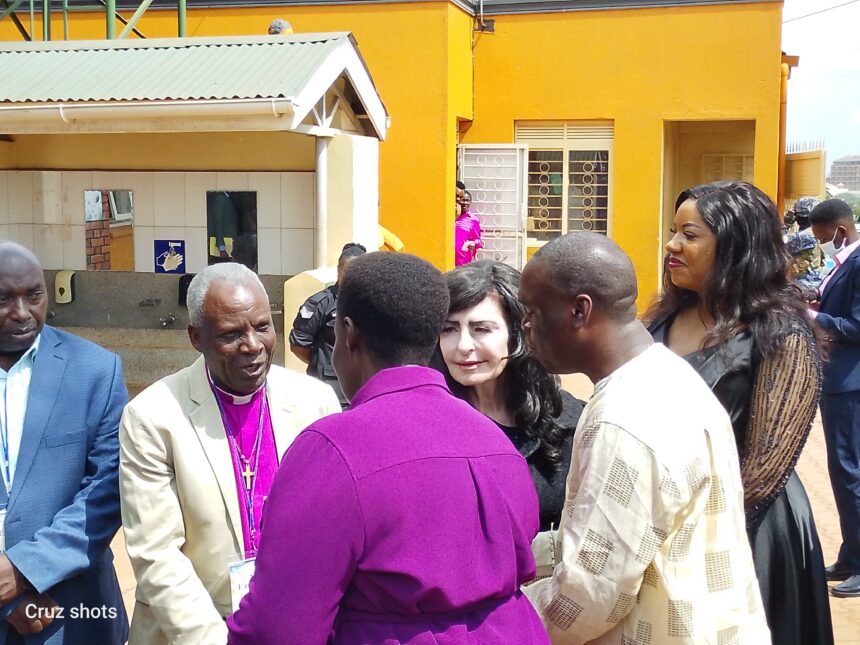
President Yoweri Museveni has praised Christianity for playing a major role in transforming Ugandan society, promoting education, unity and development.
KAMPALA — President Yoweri Kaguta Museveni has credited Christianity with contributing significantly to Uganda’s social transformation and national development, saying the faith helped introduce practices that improved the lives of communities across the country.
The President said Christianity brought what he described as “enlightenment” to society, encouraging people to abandon practices that hindered progress and embrace education, better health practices and improved standards of living.
Museveni’s message was delivered by Vice President Jessica Alupo on Tuesday, August 25, 2026, during the second day of the East Africa Fire and Anointing Pastors’ Conference held at Sharing Hall, Nsambya, Kampala.
According to the President, the spread of Christianity contributed to a change in attitudes and lifestyles, including encouraging families to educate their children and improving household practices.
“Christianity brought enlightenment to our society,” Museveni said in his message, adding that many people abandoned some of their old ways of living and adopted practices such as boiling milk and water for drinking.
He also pointed to the expansion of education as one of the positive changes associated with the spread of Christianity, particularly the increased participation of girls in education.
Christianity and national unity
Museveni further argued that Christianity’s universal message of unity is compatible with the principles that underpin the National Resistance Movement (NRM) government.
He linked the Christian emphasis on unity to the government’s broader ideals of patriotism, Pan-Africanism and socio-economic transformation, saying these values can contribute to a more united and prosperous Uganda.
The President’s remarks come at a time when religious institutions continue to play a significant role in Uganda’s social life through education, healthcare, humanitarian work and community mobilisation.
Church-founded schools, hospitals and other institutions have over the years become important providers of social services, particularly in communities where government services face challenges.
Museveni has previously urged religious leaders to go beyond preaching and actively participate in efforts aimed at improving household incomes and fighting poverty.
In July, during an engagement with Seventh-day Adventist Christians in Mityana, the President called on believers to embrace income-generating activities, arguing that spiritual growth should go hand in hand with economic empowerment.
Alupo challenges Christians on economic empowerment
While delivering the President’s message, Vice President Jessica Alupo challenged Christians not to separate their spiritual lives from their economic wellbeing.
Alupo urged believers who have embraced what she described as “spiritual light” to also pursue economic transformation, encouraging households to work harder to improve their incomes.
“If you have spiritually seen the light, then you must do the same economically,” Alupo said.
She urged Christians to avoid remaining in economic hardship when opportunities exist to improve their livelihoods, stressing the importance of personal effort and productive economic activity.
The message places household income and economic empowerment alongside spiritual growth, with Christians encouraged to translate their faith into practical action that can improve their families and communities.
Praise for American evangelist
Alupo also commended American evangelist Dr Michelle Corral for her humanitarian activities, particularly her support for refugees.
Corral, the founder of Breath of the Spirit International Ministries, was attending the East Africa Fire and Anointing Pastors’ Conference in Kampala.
Alupo recognised her work supporting vulnerable communities, including refugees living in Uganda.
Uganda hosts a large refugee population from neighbouring countries, with the New Vision report putting the figure at about two million people.
The conference brought together Christian leaders and believers at a time when religious leaders are increasingly being encouraged to contribute to both spiritual and socio-economic transformation.
Faith and development
Museveni’s message reinforces his longstanding position that religious institutions should be partners in Uganda’s development agenda.
The President has on several occasions called upon religious leaders to encourage their followers to move from subsistence activities to productive enterprises, including commercial agriculture, industry, services and information and communication technology.
He has also argued that churches and other faith-based organisations have a responsibility to address practical challenges affecting communities, including poverty, sickness and lack of education.
His remarks also come shortly after the consecration of Pastor Patience Rwabwogo as an Episcopal Bishop of Covenant Nations Church. The August 23 ceremony at Covenant Hill in Maya was attended by Museveni and First Lady Janet Museveni, alongside religious and government leaders.
The President has therefore continued to emphasise the role of faith not only in spiritual matters but also in shaping communities and contributing to national development.
For Uganda, where religious institutions remain deeply embedded in communities, the message is likely to strengthen calls for closer cooperation between government and faith-based organisations in tackling poverty, promoting education, supporting vulnerable people and advancing socio-economic transformation.