
NEC and UNOC sign landmark infrastructure deal expected to attract over 31 investors, create 35,000 jobs and accelerate Uganda’s journey towards industrialisation.
By Daily MirrorUG Reporter
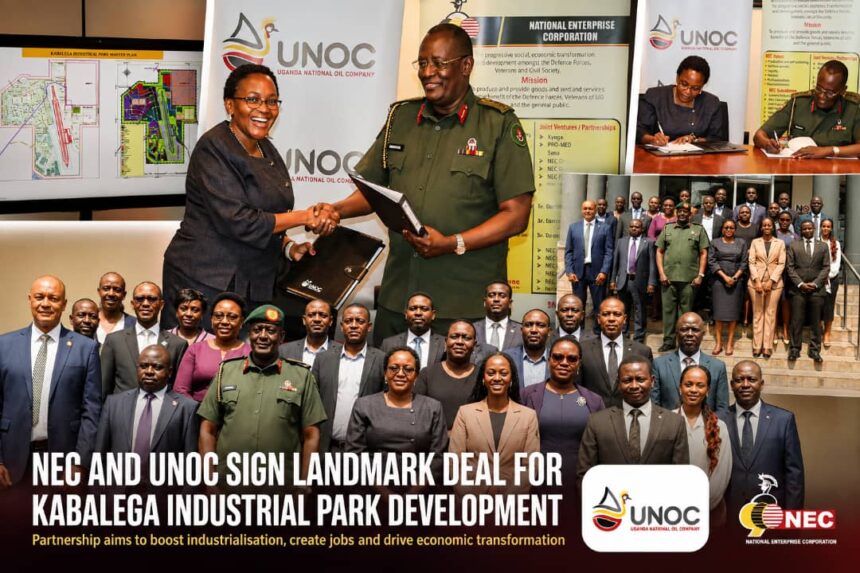
KAMPALA — Uganda’s vision of becoming a regional petroleum and industrial powerhouse moved a step closer to reality on Tuesday after the National Enterprise Corporation (NEC) and the Uganda National Oil Company (UNOC) signed a Shs10.3 billion contract for the construction of road infrastructure at the Kabalega Industrial Park in Hoima.
The agreement marks the official start of the park’s first phase of infrastructure development, a critical milestone expected to unlock investment, improve connectivity and prepare the industrial city for major oil, petrochemical and manufacturing projects.
The contract was signed by UNOC Chief Executive Officer Ms Proscovia Nabbanja and NEC Managing Director Lt Gen James Mugira, with UNOC formally handing over the project to NEC for execution.
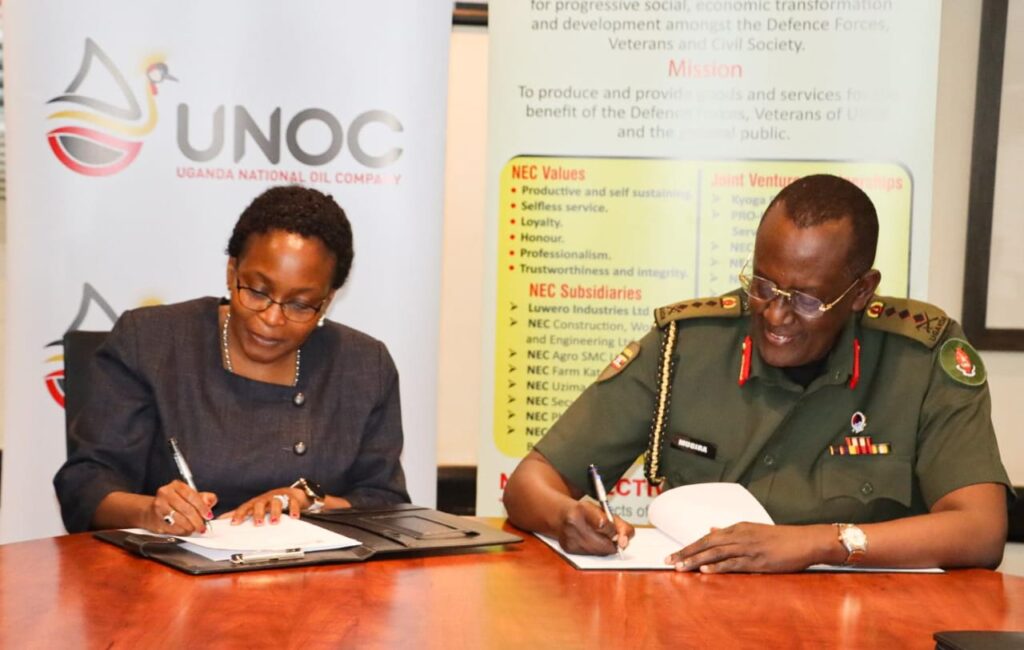
The works, scheduled to run for 15 months, will include bush clearing, removal of topsoil, construction of internal roads and installation of shoulder drainage systems—essential infrastructure that will pave the way for factories, logistics centres and petroleum-related industries within the park.
Speaking during the signing ceremony, Ms Nabbanja challenged the project teams to deliver work that reflects the highest standards of engineering excellence.
She stressed the importance of quality workmanship, strict adherence to safety and environmental standards, transparency in project implementation and continuous collaboration between NEC and UNOC technical teams.
Ms Nabbanja said the partnership should serve as a model of how government institutions can successfully work together to deliver strategic national projects that drive economic transformation and create opportunities for Ugandans.
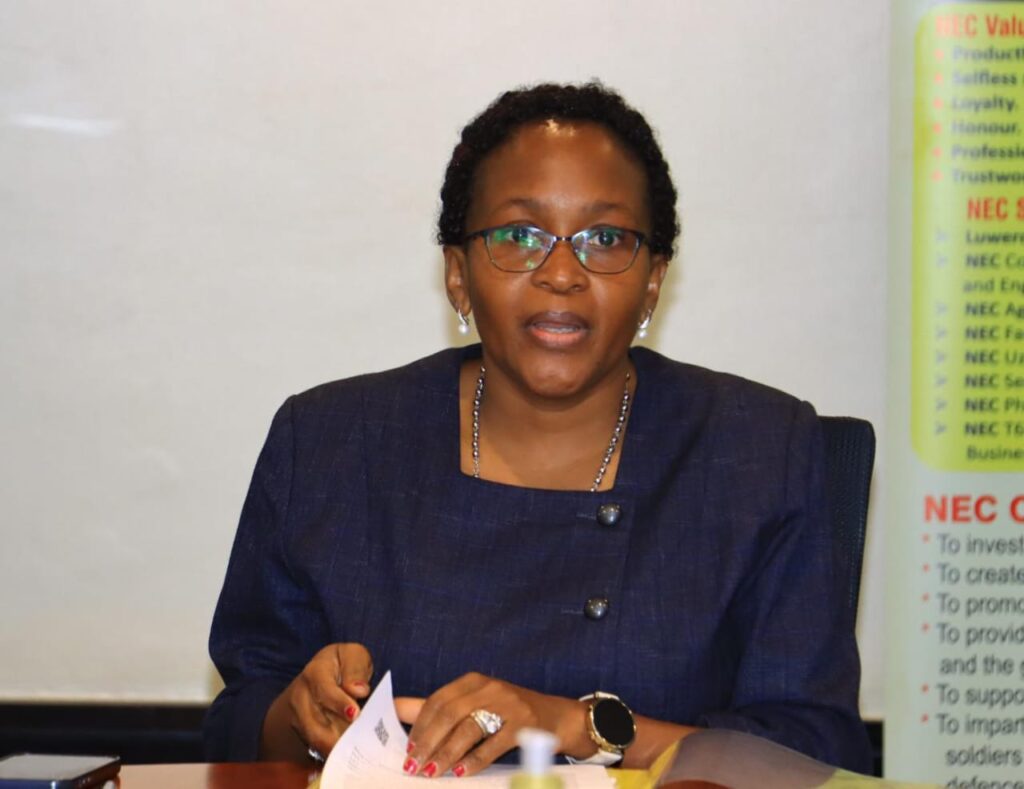
Lt Gen Mugira welcomed the partnership, describing it as another important chapter in the growing collaboration between NEC and UNOC.
He noted that the relationship is built on a Memorandum of Understanding signed on June 28, 2024, covering cooperation in engineering and construction, logistics, oil waste management, fertilizer manufacturing, feasibility studies and security services.
He added that NEC continues to strengthen its footprint in Uganda’s oil and gas industry through its partnership with the China Petroleum Pipeline Bureau (CPP) and the provision of security services for the East African Crude Oil Pipeline (EACOP) through NEC Security Services Limited.
Lt Gen Mugira also revealed that both institutions are exploring additional areas of collaboration, including the possible manufacture of unmanned aerial vehicles (UAVs) at Nakasongola, further expanding Uganda’s industrial capabilities.
He assured UNOC that NEC would execute the road project to the highest professional standards, saying the corporation recognises its strategic importance to Uganda’s oil and industrial future.

Transforming Hoima into an Industrial City
The 29.57-square-kilometre Kabalega Industrial Park is expected to become one of East Africa’s largest integrated industrial and logistics centres.
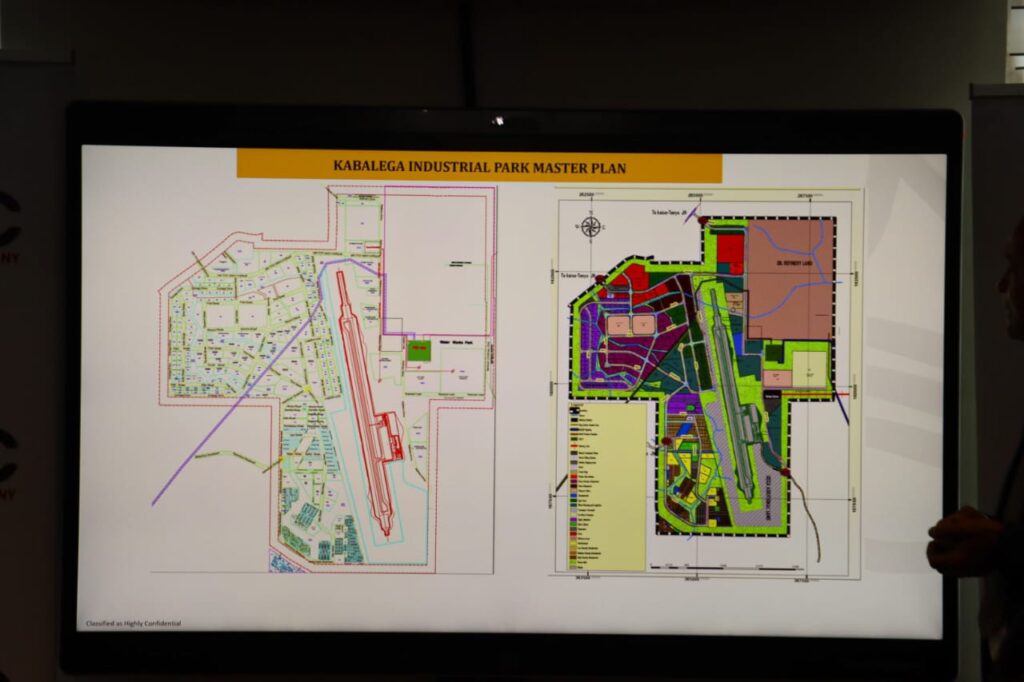
According to project details, the park is projected to attract more than 31 investors, create over 35,000 jobs and significantly increase value addition to Uganda’s petroleum resources.
The development will host Uganda’s refinery, petrochemical industries, fertilizer plants, a crude oil export hub, Uganda’s second international airport, logistics facilities, warehouses, business centres and a one-stop investment service centre.
It will also feature dedicated zones for heavy industries, petrochemical processing, light manufacturing, agro-processing and logistics services, positioning Hoima at the heart of Uganda’s industrial revolution.
Officials further disclosed that NEC intends to establish its own investment within the industrial park once opportunities become available, reinforcing government efforts to increase local participation in the country’s oil and gas value chain.
As Uganda advances towards commercial oil production, the construction of the park’s road network is expected to provide the foundation upon which billions of shillings in industrial investment will be built, creating employment opportunities, boosting local businesses and accelerating the country’s long-term economic transformation.
For Hoima and the wider Albertine region, the project signals not only the arrival of modern infrastructure but also the beginning of a new era in Uganda’s industrial and energy development.

END