

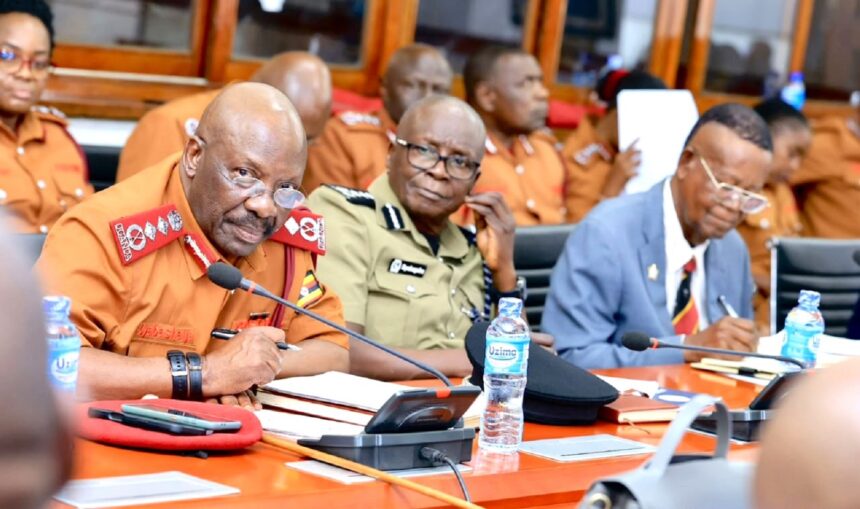
Byabashaija tells MPs inmates can access personal doctors and specialised hospitals as Parliament probes prison healthcare and congestion.
KAMPALA — The Commissioner General of Prisons, Mr Johnson Byabashaija, has told Parliament that inmates with serious or specialised medical conditions are not restricted to prison health facilities, assuring legislators that they can access their personal doctors and be referred to hospitals of their choice where necessary.
Mr Byabashaija said the Uganda Prisons Service (UPS) considers recommendations from medical professionals when determining the appropriate treatment for prisoners, including those with pre-existing conditions who require specialised care.
He was appearing before the Parliamentary Committee on Defence and Internal Affairs on Thursday which is being chaired by hon Robinah Rwakoojo where he responded to concerns from legislators about the welfare and medical treatment of high-profile remand prisoners, including veteran opposition politician Dr Kizza Besigye and former Kampala Lord Mayor Erias Lukwago.
The issue of access to healthcare was raised after legislators questioned whether prisoners with serious or long-standing medical conditions continue to receive adequate treatment once they are taken into custody.
Kampala District Woman Member of Parliament Shamim Malende asked whether inmates who had been receiving treatment from personal physicians before their incarceration are allowed to continue accessing such specialised medical services while in prison.
She said some prisoners enter custody with established medical conditions and treatment programmes that require continued supervision by doctors who already understand their medical history.
Kalungu West MP Joseph Ssewungu also raised concerns over the medical condition of Mr Lukwago, referring to medical reports from Mulago National Referral Hospital and questioning whether the recommendations of specialists were being fully reflected in information submitted to the Judiciary.
Responding to the legislators, Mr Byabashaija said the prison authorities do not prevent unconvicted inmates from consulting their personal doctors.
He said where a prison facility lacks the capacity to provide a particular service, the inmate can be referred to an appropriate public or private health facility.
“A person who is not yet convicted can have access to his personal physician. We can even take you to facilities of your choice. We have been taking one of these inmates for specialised tests at his doctor’s clinic,” Mr Byabashaija told the committee.
He explained that decisions concerning referrals are guided by medical professionals rather than prison officials.
“If we cannot handle your condition, the doctors determine where you should be referred. We can take you to Mulago or any other appropriate health facility,” he said.
12 years on remand
However, beyond the concerns over medical care, the prisons chief painted a worrying picture of Uganda’s criminal justice system, saying prolonged delays in the disposal of cases are contributing significantly to congestion in prisons.
He disclosed that some prisoners have spent years on remand without their cases being concluded, with the longest-serving remand prisoner having spent 12 years in custody waiting for trial.
Mr Byabashaija questioned whether such prolonged detention can be regarded as justice, particularly where suspects have already been committed to the High Court but their cases have not been fixed for hearing.
“The person who has waited the longest in our custody has been there for 12 years waiting for his trial to be fixed. Is that justice?” he asked.
The revelation is likely to renew debate over delays in Uganda’s criminal justice system, where remand prisoners make up a significant proportion of the prison population.
Mr Byabashaija said the Prisons Service routinely alerts the Judiciary and the Office of the Director of Public Prosecutions (ODPP) about inmates who have spent prolonged periods on remand.
He said quarterly reports, commonly referred to as Prison Form 30, are submitted to the two institutions to draw attention to prisoners who have overstayed on remand.
The Commissioner General argued that the information provided through the reports should help the justice agencies identify cases requiring urgent attention and reduce unnecessary prolonged detention.
Call for non-custodial sentences
Mr Byabashaija also called for increased use of non-custodial sentences, particularly for offenders accused or convicted of relatively minor offences.
He argued that imprisonment should principally be used for people whose continued presence in the community presents a genuine threat to public safety.
He cited cases involving minor disputes, including small land-related conflicts, where suspects can end up in prison despite the nature of the offence not necessarily requiring incarceration.
According to the prisons chief, greater use of alternatives to imprisonment would help reduce congestion and allow the Prisons Service to concentrate its resources on inmates who require custodial detention.
The call comes against the backdrop of persistent pressure on Uganda’s prison facilities, where overcrowding has placed additional demands on accommodation, food, healthcare and rehabilitation services.
Mental health services
Mr Byabashaija further told the committee that the Prisons Service is also dealing with the growing challenge of mental health among inmates.
He said a special ward has been established within the prison system to cater for inmates suffering from mental illnesses, with the service working alongside Butabika National Referral Mental Hospital to provide psychiatric care.
He added that government plans to establish a dedicated mental health facility for prisoners at Butabika are still being pursued.
The facility, if implemented, would provide specialised care for prisoners requiring psychiatric treatment and reduce pressure on existing prison health units.
Luzira relocation still awaits investor
The Commissioner General also addressed the long-standing proposal to relocate Luzira Maximum Security Prison, saying the project has not yet moved beyond the planning stage.
He said the government is yet to secure an investor with the financial capacity to undertake the proposed project.
The proposed relocation has previously been linked to broader plans to modernise correctional infrastructure and address the limitations posed by the existing Luzira prison complex.
Mr Byabashaija’s appearance before the parliamentary committee comes at a time when legislators are increasingly scrutinising the conditions under which suspects and convicted prisoners are held, including access to healthcare, the length of time spent on remand and the use of alternative forms of punishment.
The discussion also places renewed focus on the responsibilities of the Judiciary, prosecutors, police and prisons authorities in ensuring that suspects do not remain in custody indefinitely before their cases are heard.
For the Prisons Service, Mr Byabashaija’s message was that congestion cannot be addressed by expanding prison facilities alone.
He instead urged faster disposal of criminal cases, closer monitoring of prisoners who have overstayed on remand and greater use of non-custodial measures for less serious offences.
The Commissioner General’s remarks also sought to reassure Parliament that, despite limitations within the prison health system, inmates with specialised medical needs can access appropriate treatment beyond prison facilities when recommended by doctors.